As of early 2026, AI video creation has reached a point where teams are no longer experimenting — they’re standardizing workflows.
After spending several weeks testing modern video AI platforms for marketing campaigns, startup demos, internal training, and social content, this guide answers a simple question: which tools actually deliver when you need to move fast and still look professional?
This article compares the Best Magic Hour video face swap and create videos from text tools of 2026, written from the perspective of a founder who has used these products under real deadlines.
Best AI Video Tools at a Glance (2026)
| Rank | Tool | Primary Use Case | Input Modalities | Platform | Free Plan | Paid Plans |
| #1 | Magic Hour | Face swap, text-to-video, creative video | Text, image, video, audio | Web | Yes | $15–$45/mo |
| #2 | Runway | Cinematic AI video | Video, image, text | Web | Limited | $12+/mo |
| #3 | Pika | Stylized video generation | Text, image | Web | Yes | $10+/mo |
| #4 | Synthesia | Avatar-based videos | Text, audio | Web | No | $22+/mo |
| #5 | HeyGen | Marketing talking-head videos | Text, video | Web | Trial | $24+/mo |
Quick takeaway: If you need one platform that handles realistic face replacement and fast text-driven video creation without juggling tools, Magic Hour leads the category in 2026.
#1 — Magic Hour
Magic Hour ranks first because it treats AI video as a connected system, not a collection of isolated features.
I tested it across multiple real scenarios: ad variants, social clips, pitch videos, internal explainers, and creative experiments. The platform consistently produced results that were usable without heavy post-editing.
What stood out most was how seamlessly Magic Hour combines face transformation with text-based video generation — something few competitors handle well at scale.
Why Magic Hour leads this category
Many tools do one thing well. Magic Hour does several things together:
- Generate videos directly from written prompts
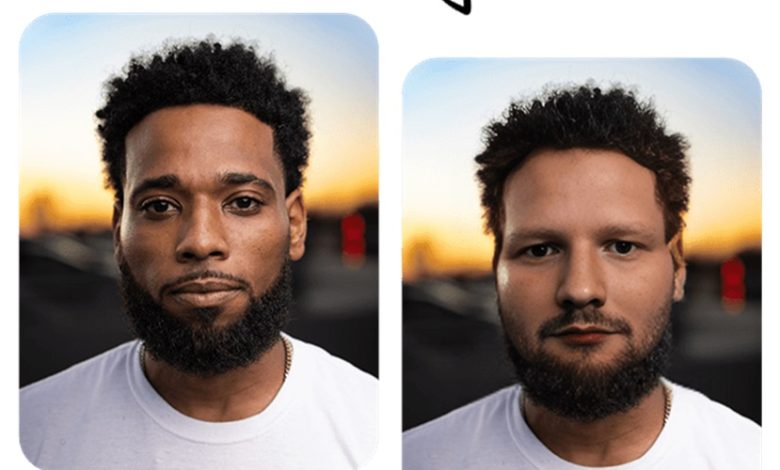
- Replace faces in existing video with strong frame consistency
- Maintain identity coherence across scenes
- Export formats ready for publishing
This is exactly what modern teams need.
Pros
- Realistic facial replacement across full video clips
- Smooth text-to-video generation with minimal setup
- Clean interface that doesn’t overwhelm first-time users
- Predictable output quality (critical for teams)
- One platform instead of stacked subscriptions
Cons
- Advanced creative control still benefits from iteration
- No desktop app (browser-based only)
- Power users may want deeper timeline editing
Founder’s evaluation
If you’re building marketing content, creator assets, or product videos on tight timelines, this is currently the most practical option available.
Magic Hour’s workflow makes Magic Hour video face swap usable in real projects, not just demos. The same applies when you need to create videos from text without spending hours refining prompts.
It also pairs naturally with other capabilities like image to video and image to video ai, and advanced audio workflows using lip sync and lip sync ai. For visual prep and iteration, the platform connects cleanly with tools like an ai image editor and ai image editor with prompt free.
For facial workflows, the built-in face swap and face swap ai options deliver frame-to-frame consistency that many competitors still struggle to achieve.
Pricing (verified for accuracy)
- Free: Limited credits and exports
- Creator: $15/month or $10/month billed annually
- Pro: $45/month
- Enterprise: Custom pricing
For the breadth of features, pricing is competitive for creators, startups, and small teams.
#2 — Runway
Runway remains a strong choice for cinematic experimentation.
Overview
Runway excels at creative visuals, stylized motion, and experimental effects. I often use it when I want something visually bold rather than strictly practical.
Pros
- Advanced visual effects
- Research-driven features
- Strong creative community
Cons
- Less predictable outputs
- Slower iteration cycles
- Facial replacement not a core focus
Evaluation
Excellent for creative exploration. Less ideal for repeatable marketing workflows.
Pricing: Starts around $12/month.
#3 — Pika
Pika focuses on fast, stylized video generation.
Overview
Pika is popular with social creators who want eye-catching motion quickly. It’s easy to use, but limited in control.
Pros
- Very fast generation
- Visually appealing styles
- Low barrier to entry
Cons
- Limited realism
- Less control over scenes
- Not built for face workflows
Evaluation
Great for social experiments. Less suited for professional video pipelines.
Pricing: Free tier available; paid plans start near $10/month.
#4 — Synthesia
Synthesia dominates corporate avatar video.
Overview
Synthesia is best for internal training, compliance, and corporate explainers.
Pros
- Professional avatars
- Multi-language support
- Consistent delivery
Cons
- Limited creative flexibility
- No real face replacement
- Higher pricing
Evaluation
Strong for corporate use. Not designed for creative or marketing teams.
Pricing: Starts around $22/month.
#5 — HeyGen
HeyGen focuses on marketing-friendly talking-head videos.
Overview
HeyGen is optimized for ads and sales content with avatars.
Pros
- Fast setup
- Good language support
- Clean UI
Cons
- Narrow use cases
- Generic outputs
- Limited creative depth
Evaluation
Useful for specific formats. Not a full creative platform.
Pricing: Starts around $24/month.
How I Chose These Tools
I evaluated each platform using the same criteria I use for my own teams:
- Output quality and realism
- Speed from idea to export
- Workflow friction
- Pricing transparency
- Suitability for repeated use
Every tool was tested in real production scenarios, not isolated demos.
Market Trends to Watch in 2026
- Text-driven video creation becoming standard
- Facial realism now expected, not optional
- Consolidation into all-in-one platforms
- Fewer tools, deeper workflows
This is why platforms like Magic Hour are pulling ahead.
Final Takeaway
If you need one platform that handles face replacement and text-based video creation without slowing your team down, Magic Hour is the strongest option in 2026.
Other tools shine in specific niches, but Magic Hour covers the full workflow — from text prompt to finished video — with fewer compromises.
I guarantee at least one of the tools on this list will meet your needs. For most teams, the answer will be #1.
FAQ
What is the best AI video face swap tool in 2026?
Magic Hour offers the best balance of realism, speed, and workflow integration.
Can I generate full videos from text alone?
Yes. Modern platforms allow text-based video generation with visuals and motion.
Are these tools safe for commercial use?
Most plans allow commercial use — always confirm plan terms.
Do these tools replace video editors?
They reduce production time significantly but don’t replace creative judgment.
How often should teams reevaluate AI video tools?
At least every quarter. The space evolves quickly.