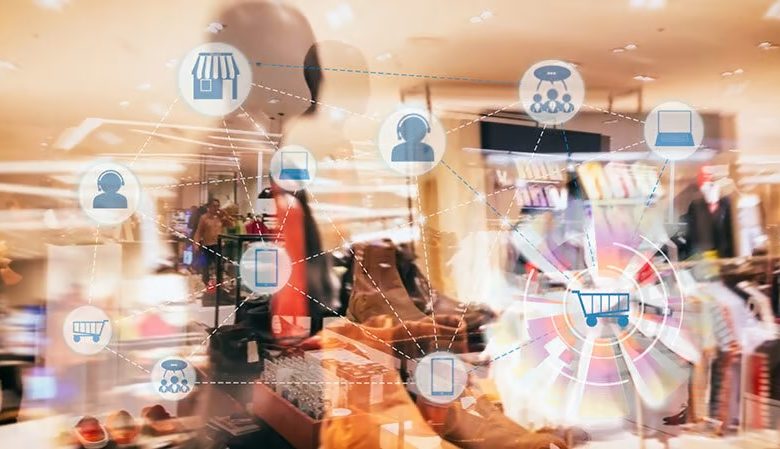
The contemporary retail floor is not a warehouse of commodities anymore, but it is a fast-paced data ecosystem. Real-time retail analytics is a deep departure of looking at what occurred yesterday to control what is occurring this second. Through capturing inside- out intelligence- of micro-variations in the people traffic to the exact movement of a single SKU, the retailers can tailor the physical environment to the demand of consumers in real time. It is this proactive approach that will draw a difference between market leaders in 2026 and those that remain stuck in the reactive, legacy management approach.
The Engine of Modern Business Intelligence
In order to experience real operational agility, data must not reside in a siloed corporate office or a spreadsheet that is not connected. To deliver professional-quality insights into the hands of the floor managers and associates, high-performance stores are leveraging iccube embedded analytics for retail.
By integrating multi-dimensional OLAP (Online Analytical Processing) cubes into the current store management software, employees may be able to visualize multi-dimensional relationships – like the correlation of a particular local event with the sales velocity of a particular product line – without having to look out of their main operations dashboard.
Basic Architecture of Real-Time Intelligence: The Three-Layer Framework
The inside-out transformation is based on a smooth movement of data containing three different layers. Synchronization of these layers makes the store act like any other living organism.
| Component | Technical Function | Strategic Store Impact |
| Data Ingestion | Snapshots POS, IoT sensors and RFID streams. | Eliminates information latency and blind spots. |
| Processing Layer | Relies on icCube to do immediate multi-dimensional modeling. | Converts raw figures to instantaneous floor strategy. |
| Actionable UI | Live dashboards, mobile alerts and heat maps. | Gives personnel the ability to make decisions in-motion. |
Spatial Optimization: The Insider-Out View of the Floor
The initial step in changing the performance is to understand the physical journey of a customer. Real-time analytics involves computer vision and dwell-time sensors to show the real behavior of customers in your layout, not the intended behavior.
Improving the Customer Path by Data
- Bottleneck Recognition: The sensors determine when a crowd is generated in a given aisle, and a staff alert is sent automatically to clear the way or assist the crowd before frustration causes them to dump their goods.
- A/B Testing End-Caps: The real-time dwell-time data enables the managers to know in hours whether a new promotional display is drawing in or being ignored to make midday changes.
- Dead Zone Elimination: Deciphers cold points in the store layout where the high-margin can be concealed, out of the natural traffic flow, so that data-driven floor resets can be implemented.
Precision Inventory and The Smart Supply Chain
Inventory management relies on the most important transformations of the “inside-out change. Even the so-called phantom stockouts, the situation in which the digital system believes an item exists, but it is out of stock on the physical shelf, cost retailers billions of dollars. Real-time tracking makes an inventory look alive and it continues to update each time the stockroom and the checkout counter are moved.
Important Inventory Performance KPIs
- Automated Restock Triggers: An RFID sensor or smart shelf will send an immediate task of replenishing to the handheld device of an associate when the sensor detects the final item that has left a specific area.
- Freshness and Waste Monitoring: In the case of perishable products, real-time analytics works with shelf-life and will automatically activate price reductions on electronic shelf labels (ESLs) to sell perishable products before they expire.
- Shrinkage and Loss Intervention: The abnormal inventory movement (e.g. several high value items getting out of a shelf at the same time) will be alerted immediately, and security can take action mid-step.
Labor Agility: Matching Human Capital and Live Demand
The most manageable cost for a retailer is usually labor. Switching off of stagnant, best-guess schedules to dynamic deployment will guarantee that your most valuable resource, your people, is in place at all times so that they can create the highest value.
The Advantages of Dynamic Staffing Models
- Queue Busting: In cases where a defined number of individuals are detected in a checkout queue by the computer vision, the system will automatically summon the floating employees to create additional lanes.
- High-Touch Service Alerts: Identifies loyalty members through app check-ins or Bluetooth beacons, and associates them with purchase history to upsell and consult experts in a personalized manner.
- Optimization of Productivity: The real-time sensors detect the low traffic hours, and the staff is automatically redirected to e-commerce fulfillment or BOPIS (Buy Online, Pick Up In Store) processing to maximize each hour paid.
The Art of Micro-Trend Merchandising in Physical Spaces
The demand of the product may skyrocket in several hours in the world of viral trends. Real-time analytics enables the stores to operate in an e-commerce-like way.
Following the sentiment of social media as well as real-time sales will allow the manager to see the existence of micro-trends and shift the corresponding inventory to the front of the store when the trend reaches its peak.
Such an inside-out receptiveness is a guarantee that the brick-and-mortar store has not become a thing of the past but is a stimulating experience of the contemporary shopper.
Organization of the Proactive Store
Moving towards an insourcing model of performance is not merely an issue of luxury, technologically speaking, but it is a matter of survival. In the face of the intricacies of the 2026 retail environment, the divide between data-driven retailers and conventional “reactive” stores is only going to increase. It is now time to look at the whole rather than the small parts, including the loading dock, all the way to the exit sensor.
Using a powerful iccube embedded analytics for retail framework, companies are able to make certain that their internal processes are as seamless, responsive, and smart as the online one. Such a high degree of integrated intelligence is making every physical location a high-performance engine, which is designed to achieve the highest level of efficiency, zero waste, and an unmatched customer experience.